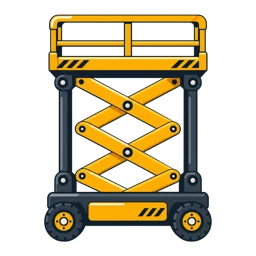
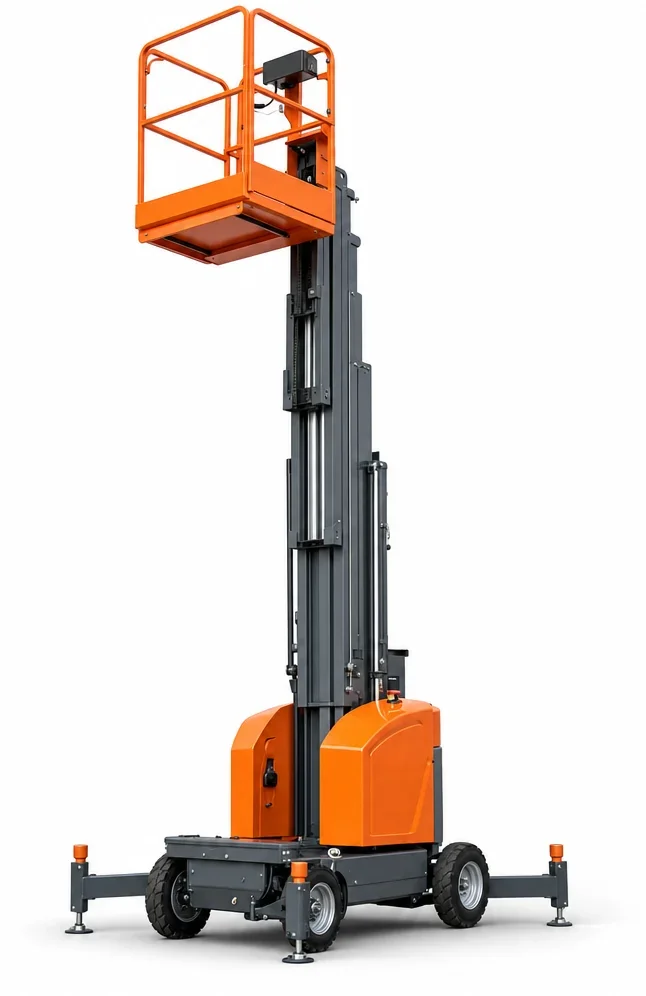
Start with the access path
- Door and hallway widths, threshold heights, and turning spaces usually decide if a mast unit can reach the task.
- Check elevator capacity and cab dimensions if the unit must travel between floors.
Where vertical masts make sense locally
- Inventory counts and light maintenance in climate-controlled interiors where low emissions and low noise are required.
- Tight corridors in older industrial buildings where scissor lifts are too wide to pass.
Measurements to confirm
- Working height vs. task height: vertical masts offer efficient up-down motion but limited outreach.
- Machine width, stowed height, and inside turning radius for navigating doorways and racking.
- Floor condition and slab rating; these units are intended for smooth, firm surfaces.
Seasonal and terrain notes in York
Most vertical mast lifts are indoor-focused. During wet months, plan staging so units avoid exterior thresholds that become slick or uneven. In winter, track-in snow at doors can change traction and braking distances on polished slabs.
When another lift fits better
- If two people and more tools are needed at height, a narrow electric scissor may be more productive. See /electric-scissor-lift-rental/.
- For exterior or uneven ground, consider /rough-terrain-scissor-lift-rental/ or a /boom-lift-rental/ option depending on height and reach.
Related categories
- Interior scissor options: /electric-scissor-lift-rental/
- Uneven-surface platforms: /rough-terrain-scissor-lift-rental/
- Category overview: /aerial-lift-rental/