Start with line-of-sight reach
- Can the machine sit directly in front of the task with no need to bend around obstacles?
- Does the job require sustained outreach across open yards, retention areas, or truck courts?
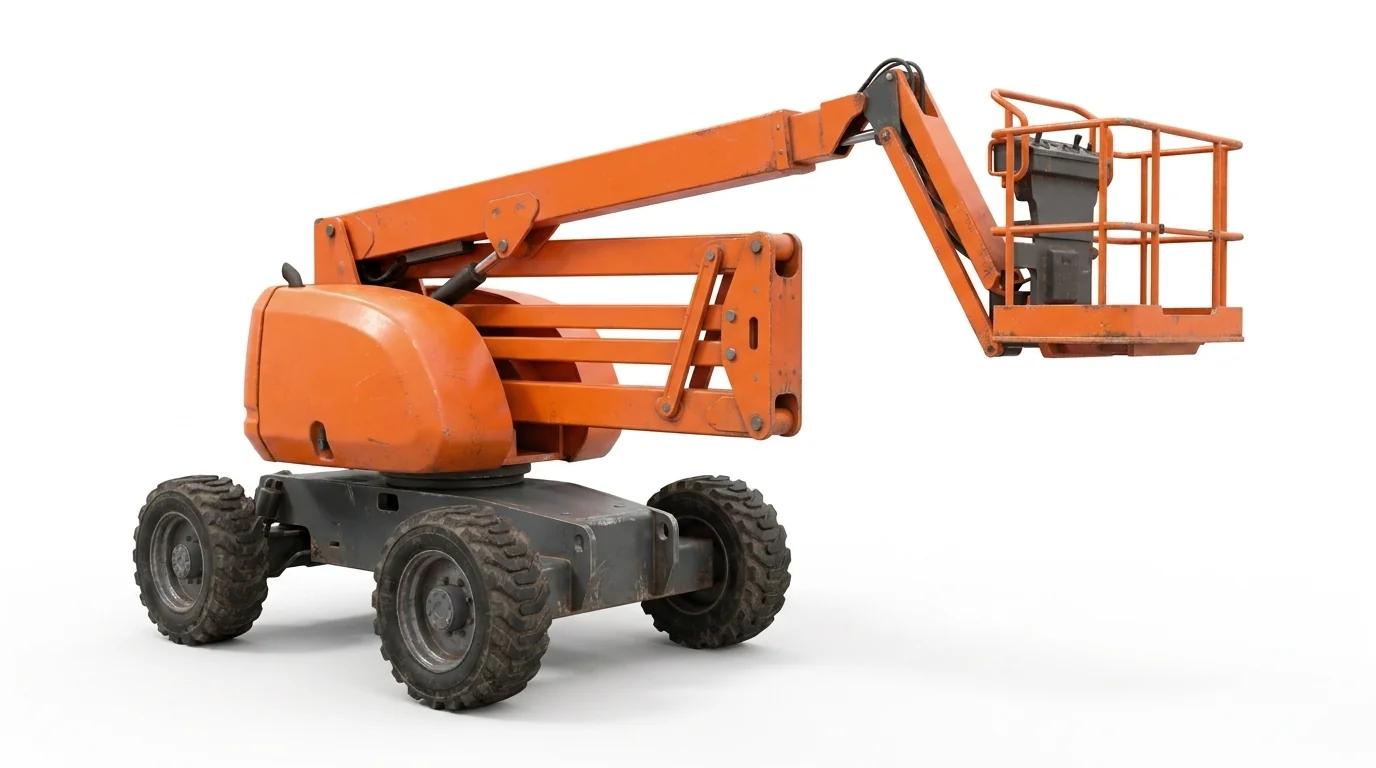
If yes, a straight boom typically provides longer horizontal reach and faster platform travel than an articulating model. This is valuable on large industrial sites common across York, PA.
Ground and weather considerations in York
- Rolling grades and mixed stone-asphalt transitions can influence set-up. Confirm whether the approach path keeps the chassis level enough for safe operation under site rules.
- Clay-heavy soils hold water in spring; plan for firmer pads or established drives instead of newly graded ground.
- Winter conditions can leave icy patches near dock areas; account for traction and turning room when staging the boom.
Key measurements
- Maximum horizontal reach vs. required setback from the façade or pole line.
- Platform capacity necessary for lighting fixtures, signage, or façade materials.
- Overall width, axle stance, and turning radius to navigate gates and service roads.
- Height restrictions under power lines, pipe racks, or canopy edges on the way to the work zone.
When another lift makes more sense
- If the target sits behind parapets, conveyors, or pipework, consider a jointed option. See /articulating-boom-lift-rental/.
- For vertical indoor work on smooth floors, an electric scissor may be more efficient. See /electric-scissor-lift-rental/.
Planning for high-bay logistics sites
Long, unobstructed façades are common at local distribution buildings. Telescopic booms reduce repositioning along these runs. Verify truck traffic patterns and time windows so the lift can occupy a stable position without conflicting with yard movements.
Related categories
- Boom category overview: /boom-lift-rental/
- Up-and-over work: /articulating-boom-lift-rental/
- Material placement support: /telehandler-rental/