Start with the work height and the stand-off
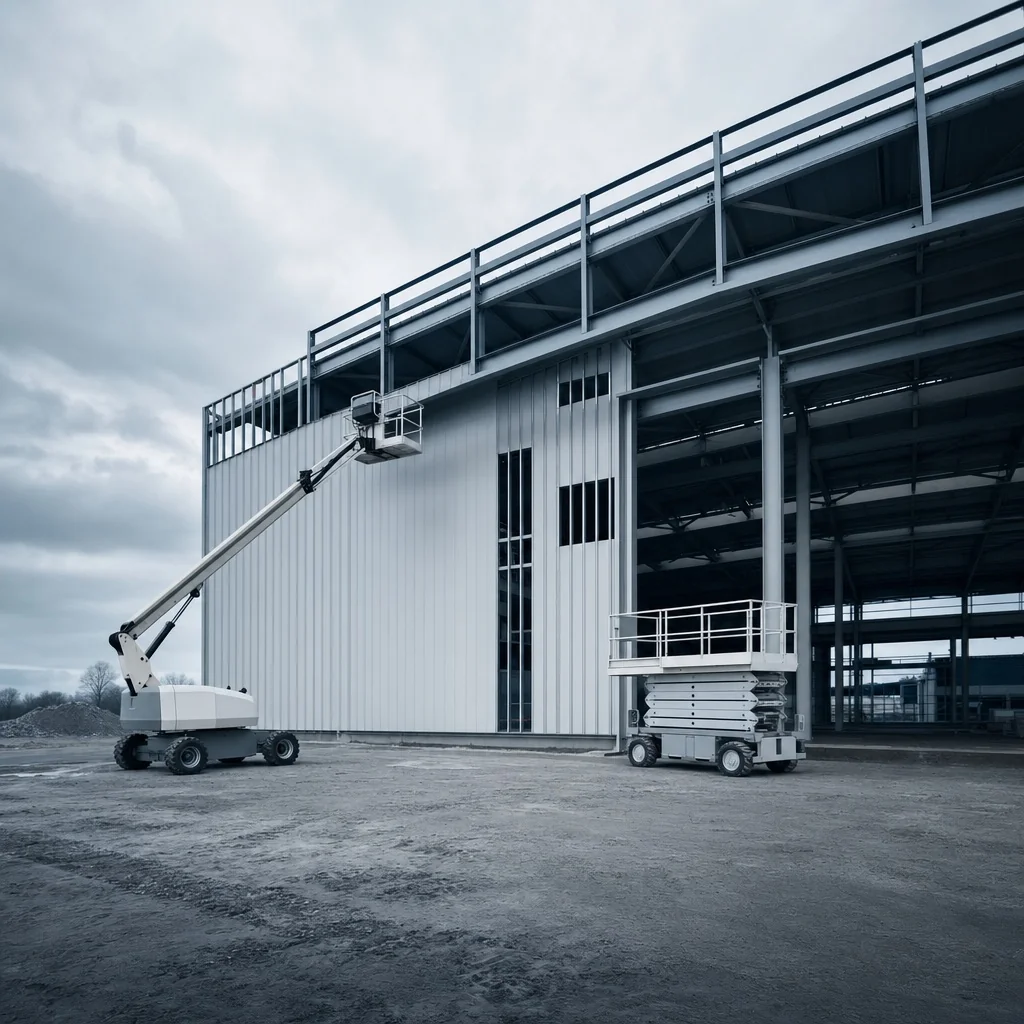
Measure the working height and whether the platform can sit directly under the task. Scissor lifts go straight up with a rectangular deck. If the task is offset over machinery, pipe racks, or conveyors, a boom lift may be the better geometry; see /boom-lift-rental/.
- Indoor inventory, lighting, and racking: electric units with narrow widths help clear pallet rows and dock doors.
- Exterior façade, steel, and MEP rough-in: rough-terrain units offer higher capacity decks and four-wheel traction for rolling ground.
How York’s sites shape the choice
Local distribution buildings often have smooth, sealed floors and long travel paths. That favors compact electric scissors with non-marking tires and tighter turning. By contrast, many industrial sites around York sit on rolling terrain with clay and rock that hold moisture in spring. Outdoor work there typically points to rough-terrain scissors with higher ground clearance and traction features.
Floor load, width, and access constraints
Before locking in a class, check:
- Floor rating and slab condition in older manufacturing areas.
- Doorway and elevator clearances for upper-level access.
- Aisle widths near pallet racking and mezzanines.
- Ground bearing outside, especially after freeze–thaw cycles.
If the route includes long pushes under mezzanines or through tight receiving lanes, an electric model from /electric-scissor-lift-rental/ is usually the right starting point. If you’ll cross compacted stone, mud, or grass to reach the work, compare options at /rough-terrain-scissor-lift-rental/.
When a scissor isn’t the match
If the task sits out over equipment lines or a roof edge, consider /aerial-lift-rental/ for articulating or telescopic booms that can reach up and over. For very narrow indoor spots, a vertical mast may be more practical; see /vertical-mast-lift-rental/.
Actual site conditions, the selected unit’s instructions, and job procedures govern setup and use for any exterior or elevated work.